Category: Uncategorized

  • How Pandemics Reshape Cultural Traditions

    How Pandemics Reshape Cultural Traditions

    I still remember the exact day everything changed. It was a Friday afternoon, and my mom got a phone call from the school. She hung up, turned to me, and said, “You’re not going to school for the next two weeks.”

    At the time, I didn’t think much of it. I had heard about this virus that was spreading in other countries, but I assumed it was something small, something that would blow over quickly. Two weeks off of school sounded like a vacation. I imagined sleeping in, watching movies, and catching up on homework that I probably wouldn’t actually do. But then two weeks turned into a month, and that month stretched into two years.

    Suddenly, life as we knew it came to a halt. And with that, so did many of the cultural traditions we took for granted.

    Looking back, it’s incredible how much the pandemic reshaped how we connect and celebrate. Holidays like Thanksgiving and Christmas moved from crowded dining rooms to glitchy Zoom calls. Birthdays were celebrated through car parades, with friends honking from their driveways. Even graduations turned into virtual ceremonies, where instead of walking across a stage, students waved to webcams in their living rooms.

    But it wasn’t just the big events that changed, it was the small rituals too. Family dinners became sacred again. People started baking bread, cooking traditional recipes, and gardening as ways to feel grounded. Communities found creative ways to stay connected, from drive-in movie nights to socially distanced outdoor gatherings. Somehow, even in isolation, we found ways to hold onto what made us human.

    Anthropologists often talk about how pandemics throughout history reshape culture. During the Black Plague in the 14th century, for example, people reexamined faith and mortality, leading to shifts in art, religion, and medicine. During the 1918 flu pandemic, traditions like handshakes disappeared for years, and public health became a collective value. COVID-19 will be remembered the same way, not just for the science behind it, but for how it transformed everyday life.

    What fascinates me is how quickly new traditions replaced old ones. We learned to celebrate virtually, to express affection through screens, to mourn without being physically present. And even though it was hard, it showed how adaptable people are. Our rituals didn’t disappear, they evolved.

    When I finally returned to school two years later, everything felt different. People had changed, but so had the way we valued community. Simple things, like sitting with friends at lunch or seeing someone’s full smile without a mask, felt meaningful again.

    Pandemics have a strange way of reminding us what matters. They strip away the excess and force us to rebuild our traditions around connection, empathy, and resilience. So while that phone call from my mom marked the beginning of something scary and uncertain, it also marked the start of a new kind of cultural awakening, one that taught us how to hold on to each other, even when we had to stay apart.

  • Seeing Isn’t Believing – A Family Moment That Revealed the Generational Media Gap

    Seeing Isn’t Believing – A Family Moment That Revealed the Generational Media Gap

    A few months ago, I was sitting in the living room with my parents when I showed them a video I’d found online. It was of a woman flying through the air on what looked like a real hoverboard. She zoomed over the water, flipped midair, and landed gracefully like something straight out of a sci-fi movie. My parents were absolutely amazed.

    “Wow! How is that possible?” my mom said.
    “That looks dangerous,” my dad added. “I didn’t even know physics allowed for that!”

    I couldn’t help but laugh. “Mommy, Baba,” I said, “this video was made by AI.”

    For a second, they looked at me in disbelief, then in realization. It was one of those moments where I could literally see the generational gap in how we interpret media. To them, the video was magic. To me, it was just another example of how convincing digital content has become.

    That moment stuck with me because it perfectly captured how differently generations approach media trust. My parents’ generation grew up in a world where most information came from established institutions, newspapers, television, and radio. If something was broadcast or printed, it was probably true.

    But my generation? We’ve grown up surrounded by Photoshop, filters, deepfakes, and misinformation. We’ve seen enough viral hoaxes and “too-good-to-be-true” stories to question almost everything we see online.

  • One Table, Many Stories – A Multicultural Thanksgiving

    One Table, Many Stories – A Multicultural Thanksgiving

    One of my earliest Thanksgiving memories isn’t just about turkey or pumpkin pie, it’s about translation through food. I grew up in a mixed family: some of my cousins came from European roots, others from Chinese heritage, and all of us were born in America. Every Thanksgiving dinner felt like a delicious cultural exchange.

    One side of the family brought the traditional American turkey with mashed potatoes and gravy, another brought delicate French-style crepes filled with Nutella and fruit, and my Chinese cousins brought mapo tofu, a spicy Sichuan dish that filled the room with warmth (and a little bit of chili-induced coughing).

    At first, it didn’t seem unusual to me. It was just “Thanksgiving.” But looking back, I realize how special it was that one table could hold so many stories, traditions, and histories. It wasn’t just a meal, it was a ritual of sharing.

  • Why Every Great Communicator Is a Great Listener First

    Why Every Great Communicator Is a Great Listener First

    I still remember sitting in a crowded conference hall one summer during a media and journalism program. One of the most respected journalists in the country had come to speak to us about what makes journalism truly great. She said a lot of insightful things that day, but there was one line that stuck with me, and probably always will.

    She said, “The best communicators start off as great listeners.”

    At first, I didn’t really understand what she meant. I thought being a good communicator was about how well you could speak, how confident your voice sounded, how clearly you could express your point, how engaging your story was. Listening didn’t seem like the main skill. But as I got more involved in journalism and began doing interviews and stories myself, I realized just how right she was.

    The best stories I’ve ever told were the ones I almost missed, because I wasn’t just hearing the words being said, I was listening for what wasn’t.

    One of the most eye-opening experiences for me came when I met a woman named Sylvia while volunteering at a local food pantry. It was a hot summer day, and I was helping distribute watermelons door-to-door for families in need. When I got to Sylvia’s door, she smiled politely but said very little. I asked her a few casual questions about the food program, but she looked down, avoiding eye contact. For a moment, I considered moving on. But something about the silence made me pause.

    Instead of filling the quiet with small talk, I decided to wait. And after a few seconds, Sylvia began to speak, not just about the food she received that day, but about her entire experience living with food insecurity. She told me about the challenges she faced affording fresh produce, how rising costs made it impossible to buy healthy food, and how many families she knew were struggling silently. She said most people stopped talking about it because they felt unheard.

    That moment changed everything for me. I realized that so many stories go untold not because people don’t have anything to say, but because no one’s listening long enough for them to say it.

    Since that day, I’ve learned to appreciate the power of silence. Sometimes the most meaningful parts of a conversation happen after the question, in that pause when someone decides whether or not they can trust you with their truth. Listening isn’t passive, it’s active, intentional, and deeply human.

    In journalism and storytelling, listening transforms how you see the world. It turns interviews into conversations, subjects into people, and stories into something living and real. When you really listen, you’re not just collecting quotes, you’re understanding emotion, context, and depth.

    That summer conference taught me about the power of words. But Sylvia taught me something even more valuable: that the stories worth telling often come from the moments when you stop talking. Every great communicator, I’ve come to believe, starts there, with open ears, open eyes, and a genuine willingness to hear before being heard.

  • Human Attention Span

    Human Attention Span

    Goldfish have a longer attention span than we do! In 2000, the average human attention span was 12 seconds, after only 22 years, we are down to about 8.2. A goldfish can keep it together for 9 seconds.

    The fight for 15 seconds is a battle I’ve fought for 3 years. I spend hours perfecting videos for YouTube. At the start, the average viewer stayed on my videos for only 8 seconds. Following these terrible analytics, I dove into research on the human attention span and how to hold onto it. Here’s what I learned: 

    • Use bold colors
    • Edit cleanly
    • Make your message clear
    • Jump to the point
    • Never waste a second

    Now, I average a whopping 16 seconds. That may sound tiny but it’s 8 seconds longer than most video retention scores!

    Use Bold Colors 

    \

    An object stands out against its environment when it is brighter and more colorful. High-contrast colors travel to our brains the quickest, effectively winning attention and retention. 

    I never use pastel colors. Primary colors brightened to the max are my go-to’s. 

    Edit Cleanly

    Clean/professional editing is the key to allowing your audience to fully engage with your content. When I watch something, I want to be fully immersed in the action. However, a bad cut will immediately snap me out of the story and I will skip to the next video. 

    It is important to take the time to edit seamlessly because the way you piece your content together is critical to the connection with your audience. 

    You want them to stick with you for more than your allotted 8 seconds. 

    Make your message clear

    “Make sure to like, comment, share, and subscribe.” 

    This is the sentence that starts almost every video on social media. However, it is a big mistake. 

  • The Empty Chair – What I Learned When Family Dinner Changed

    The Empty Chair – What I Learned When Family Dinner Changed

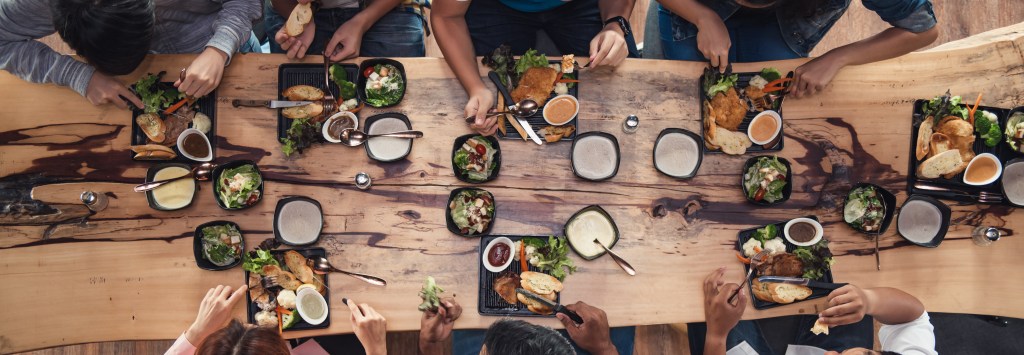
    I remember the first time my family didn’t have dinner with all five of us. For as long as I can remember, dinner was the anchor of our day. No matter how busy we were, my parents always made it a point for everyone to sit together at the table, talk about our days, and eat as a family. It wasn’t just about the food; it was about the ritual.

    But when my brother went off to college, everything changed. Our table of five became four. Then I got older, too. Suddenly, I had after-school activities, club meetings, and homework that stretched late into the night. I started eating dinner hunched over my textbooks instead of sitting down with my parents.

    What used to be laughter and conversation turned into quiet bites between study sessions. I didn’t think much of it at first, but eventually, I started to notice the difference, not just in our family routine, but in the way I felt.

    It’s funny how much a dinner table can hold. It’s not just plates and food; it’s identity. It’s where culture, tradition, and values are passed down, sometimes without anyone even realizing it.

  • Cross-Cultural Misunderstandings in Communication

    Cross-Cultural Misunderstandings in Communication

    I still remember my first real Chinese New Year family reunion. It was one of those moments that felt straight out of a movie, red decorations hanging from the ceiling, the smell of dumplings and soy sauce filling the air, and the sound of laughter echoing from every corner of the house. Twenty people, maybe more, sat around one big circular table that was covered with steaming dishes of fish, noodles, and vegetables.

    Everyone was speaking Chinese, fast.

    I sat there, chopsticks in hand, smiling and nodding along even though I had absolutely no idea what anyone was saying. The conversation moved so quickly that it felt like music I couldn’t quite follow, rhythmic, familiar, but just out of reach. I tried to catch a few words I’d heard before, but they slipped away before I could make sense of them. I felt out of place, like I was at the center of my own family but still somehow on the outside looking in.

    That’s when my popo, my grandmother, looked over at me. She must have noticed my confused expression because she smiled and, in her gentle voice, asked in English, “Are you hungry?”

    It was such a small thing, but in that moment, it meant everything. It reminded me that even when words don’t connect, love still does. Popo didn’t need to explain every joke or conversation, I could feel the warmth through her question, through the way she piled food onto my plate without asking, and through the laughter that surrounded the table.

    That dinner taught me something important about cross-cultural communication: sometimes misunderstanding isn’t failure—it’s part of being human. Different languages, customs, and traditions can create barriers, but they also create bridges. When we slow down and pay attention, we realize that connection doesn’t always come from perfect translation, it comes from care, patience, and effort.

    Cross-cultural misunderstandings happen everywhere. Maybe it’s using the wrong greeting, misinterpreting a gesture, or struggling to express something that doesn’t quite fit in another language. But those moments are also opportunities to learn and grow. They remind us that communication isn’t just about what we say, it’s about what we mean, and how we make others feel.

    That Chinese New Year, I didn’t understand most of the words spoken around the table, but I understood what mattered. The laughter, the food, the generosity, it all spoke louder than language ever could.

    Because sometimes, the most meaningful conversations don’t need words at all.

  • Beyond the Swipe – Why Long-Form Journalism Still Matters

    Beyond the Swipe – Why Long-Form Journalism Still Matters

    Long-form journalism gives space for truth to unfold. It lets you see the full picture: the interviews, the background, the human impact. It invites you to understand rather than just react. That’s what’s missing in today’s world of digital snippets: the room to think, question, and connect the dots.

    Don’t get me wrong, short videos and social posts can do amazing things. They can bring attention to issues that would otherwise go unnoticed, and they make information accessible to people who might never read a full newspaper article. But if that’s all we consume, we lose something valuable.

    Stories become simplified. People become stereotypes. And the “truth” becomes whatever fits into a caption.

    That’s why I think balance matters. There’s nothing wrong with scrolling through your feed, but it’s worth slowing down once in a while, watching the full interview, reading the whole article, or sitting through that two-hour documentary. Because sometimes the most important stories can’t be told in sixty seconds.

  • The Shift in Power – How Social Media Rewrote the News

    The Shift in Power – How Social Media Rewrote the News

    It’s crazy to think about how much the way we get our news has changed in such a short time. Just twenty years ago, the headlines that shaped public opinion came from big names: The New York Times, CNN, The Washington Post. News anchors had the final word, and if a story wasn’t covered by a legacy network, it might as well not have existed. But now, it feels like that power has shifted to the palm of our hands—literally.

    At a news conference I attended last summer, the moderator asked a simple question: “Where do you get your news from?” Almost every teenager in the room raised their hand for TikTok, Reddit, or YouTube. Around 80 percent, easily. Only a handful mentioned newspapers or TV. It was shocking at first, but also kind of eye-opening. The world of news has changed, and it’s changing faster than anyone expected.

    There are a few reasons for this shift. For one, social media gives anyone a voice. You don’t need a press badge or a million-dollar newsroom to share what’s happening around you, you just need a phone and a story. Platforms like TikTok have made it possible for everyday people to become witnesses, reporters, and storytellers.

    As someone who built my own platform on YouTube, I’ve seen the upside of that firsthand. I’ve been able to share stories that probably wouldn’t have made it past traditional media filters and connect with audiences who might have never found them otherwise.

    The result? A more democratic, but also more chaotic, information world. The gatekeepers are gone, and in their place stand creators, algorithms, and audiences trying to figure out what’s real.

  • The Psychology of Viral Videos: Why Do Videos go Viral?

    The Psychology of Viral Videos: Why Do Videos go Viral?

    I still remember the exact moment it happened.
    It was the Fourth of July, and my family and I were driving to see fireworks when my phone suddenly exploded with notifications. Thousands of them. For a second, I thought something was wrong, then I realized what had happened: my most recent YouTube video had gone viral.

    It was the moment I had dreamed about for an entire year. I had poured hours into editing, scripting, and fine-tuning my videos, hoping one of them would finally break through. And that night, it did. But after the excitement settled, a question started to form in my head: why that video?

    Why do some videos go viral while others—sometimes even better ones—barely get noticed? I knew it couldn’t just be about effort. There are thousands of small creators who spend hours perfecting their videos that never get traction, while some random five-second clip takes off overnight. So, I started researching.

    What I found was that social media platforms operate like companies—their algorithms are designed to keep viewers on the platform for as long as possible. That means videos that are sticky, emotional, or easy to share are favored. It’s less about production quality and more about engagement potential. If your video makes people watch till the end—or better yet, makes them comment, like, or share, it tells the algorithm, “Hey, this keeps people hooked,” and the platform pushes it out to more users.

    But there’s also a psychological side to virality. Studies show that videos that trigger strong emotions, especially awe, laughter, or anger, tend to spread faster. Humans are wired to share emotional experiences. When something makes us feel deeply, we want others to feel it too. That’s why heartwarming rescue videos, shocking headlines, and funny clips blow up—they make us react instantly.

    Timing also plays a role. Posting when your audience is most active or when a topic is trending can make the difference between 100 views and 1,000,000. People want to feel part of the moment, and viral content feeds that sense of belonging.

    And then there’s the “relatability factor.” Viral videos often feel personal. They look raw, authentic, and unscripted, even when they’re not. Viewers see a bit of themselves in the creator or the situation, which builds trust and makes them hit “share.”

    So while I may not have cracked the full formula behind virality, I’ve learned this: going viral isn’t just about luck. It’s about understanding how people think, feel, and connect. Every share, every comment, every click, it’s all part of a bigger psychological pattern.

    That Fourth of July taught me more than what it feels like to go viral. It showed me how powerful storytelling can be, even in its simplest, shortest form. And ever since then, I’ve been chasing not just numbers, but the human reasons behind them.