Category: Uncategorized

  • Finding the Story Next Door – How I Discovered the Power of Local News

    Finding the Story Next Door – How I Discovered the Power of Local News

    When I was a kid, the news in my house usually meant big networks: CNBC, CNN, FOX, covering national headlines and world events. I thought that was what journalism was: political debates, global issues, and breaking stories that affected millions.

    But as I got older and began exploring broadcasting myself, my understanding of journalism started to shift. It wasn’t until I began volunteering at my local community food pantry that I truly saw the power and necessity of local news.

    At first, I didn’t think much of it. But while filming and reporting on local stories, I noticed something that national networks often miss: connection. Because I was part of the same community I was covering, people trusted me. They opened up about their experiences, the rising cost of groceries, the lack of public transportation, the challenges of balancing work and family.

    These weren’t “headline stories” in the traditional sense, but they were the heartbeat of our town. And without local journalism, many of these stories would never be told.

  • The Heartbeat of a Town – Why Local Journalism Still Matters

    The Heartbeat of a Town – Why Local Journalism Still Matters

    That’s what makes local journalism so important: it preserves the identity of a community. While national outlets report on what’s happening across the country, local journalism focuses on what’s happening across the street. It covers the food drives, small businesses, local elections, and personal stories that shape how people actually live. It reminds people that their voices matter, even if they’re not making national headlines.

    There’s also a deeper level of accountability. Local journalists don’t just report to a community; they report within it. They know the neighborhoods, the schools, and the people behind the issues. That kind of familiarity builds trust, and trust builds participation. When residents see their stories represented honestly, they’re more likely to get involved, speak up, and advocate for change.

    In a time when national media can sometimes feel distant or divisive, local journalism acts as a grounding force. It brings people together, reinforces shared values, and celebrates what makes each town unique. Without it, we risk losing not just information, but identity.

    For me, seeing this firsthand has changed how I approach storytelling. Whether I’m behind the camera or in front of it, I try to carry that same spirit, to listen to the voices around me, to tell stories that reflect real people, and to remember that sometimes the most meaningful news doesn’t come from a newsroom in New York, but from a conversation right here at home.

  • New Traditions, Same Meaning – Rites of Passage in the Digital Age

    New Traditions, Same Meaning – Rites of Passage in the Digital Age

    In modern society, our rites of passage have evolved. Sweet sixteens, quinceañeras, and graduations all serve as modern versions of ancient rituals, shaped by culture, community, and, increasingly, social media.

    A sweet sixteen isn’t just a party anymore; it’s a production, complete with Instagram-worthy decorations and TikToks documenting every moment. College graduations are livestreamed for family across the world. Even digital milestones, like hitting 100,000 followers or getting your first big job offer, can feel like new-age coming-of-age moments.

    What’s interesting is that while the form of these rituals changes, the purpose doesn’t. At their core, they’re about connection. They bring families and communities together to celebrate transition, to acknowledge that someone has reached a new stage in life. Whether it’s a parent cheering in the crowd at a graduation or a grandmother helping a teen into her quinceañera gown, these moments remind us that growth is never something we do alone.

    In a world that moves so fast, these rituals give us pause. They tell us to slow down, reflect, and celebrate how far we’ve come. They’re bookmarks in the story of our lives, evidence that we’re still moving forward, still learning, still changing.

    So whether it’s walking across a stage, blowing out candles, or tossing a cap into the air, every rite of passage matters. Because in the end, these moments, big or small, help us remember that growing up isn’t about reaching one finish line. It’s about all the little ceremonies that teach us who we’re becoming along the way.

  • From Hieroglyphs to Hashtags – How Storytelling Never Stopped

    From Hieroglyphs to Hashtags – How Storytelling Never Stopped

    I remember reading an article in my world history class about hieroglyphics in ancient Egypt and the role of scriptures and symbols in early storytelling traditions. There were also examples from ancient China: paintings, scrolls, and oral myths passed down for generations.

    What fascinated me most was how these stories managed to survive. Thousands of years later, there we were, a room full of sophomores, trying to decode what those symbols meant, piecing together the thoughts and emotions of people who lived millennia before us.

    That got me thinking: what is our version of that? What will people study thousands of years from now, when they want to understand us?

    I think the answer might be YouTube.

    It sounds funny at first, but in a way, YouTube has become our modern-day form of storytelling, our version of oral tradition and ancient inscriptions. Instead of chiseling words into stone or painting stories onto walls, we film them. People share everything: vlogs, documentaries, tutorials, music, and memories, and they’re archived permanently online.

    Someday, future generations might scroll through our videos the same way we scroll through ancient texts, trying to understand what mattered to us, how we lived, and what we believed in.

  • The Human Archive – Why Digital Stories Keep Our Voices Alive

    The Human Archive – Why Digital Stories Keep Our Voices Alive

    The medium has changed, but the impulse hasn’t. Humans have always wanted to tell stories. Oral traditions kept histories alive long before writing existed; elders would gather communities to pass down myths, genealogies, and lessons.

    The printing press, radio, and television transformed that instinct into something wider and faster. And now, the internet has made storytelling immediate, interactive, and global.

    On YouTube, a single video can reach millions of people in minutes. That’s something ancient storytellers could have only dreamed of. But at its core, it’s still the same instinct: to connect, to teach, to preserve, and to be remembered.

    What’s amazing about platforms like YouTube is that they blur the line between personal and historical storytelling. A vlog about a family dinner might seem ordinary now, but in a hundred years, it could be a window into the culture, fashion, and values of our time.

    Just like hieroglyphics tell us about ancient Egyptian beliefs or Chinese poetry reveals dynastic traditions, YouTube might one day tell future generations about us, our humor, our struggles, and our creativity.

    So while we may not think of it this way, every video we upload and every story we share online becomes part of a larger human archive. Storytelling has always been about continuity, and whether it’s carved into stone or captured on camera, the goal is the same: to make sure our voices outlive us.

    And maybe that’s why I write these blogs too. Maybe, in some way, I want my voice to live on, to leave behind something that speaks for who I was, what I thought about, and what I cared for long after I’m gone. Because that’s what storytelling really is: a conversation that never ends.

  • The Quiet in History – Listening to What’s Left Out

    The Quiet in History – Listening to What’s Left Out

    That lesson hit me again in AP U.S. History. We were studying groups of people whose voices were left out of the traditional narrative: enslaved people, women, Indigenous nations, and immigrants. Their stories were there all along, just not in the textbooks written by those in power.

    It reminded me of the saying, “History is written by the victors.” Or maybe more accurately, it’s written by the wealthy, the literate, and the loud.

    But what about everyone else?

    The silences in history tell us just as much as the words on the page. The absence of certain voices, people who were too poor, too oppressed, or too marginalized to be heard, speaks volumes about whose stories we value. Those gaps aren’t empty; they’re full of meaning, waiting for someone willing to listen closely enough to fill them in.

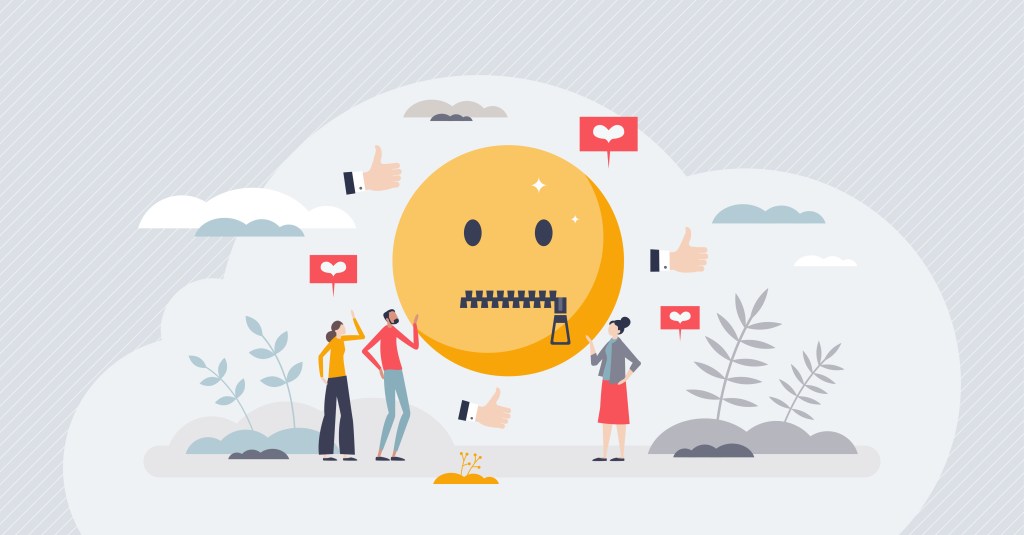
    That’s why I think silence shouldn’t always be seen as a lack of something. Sometimes it’s a form of resistance. It can be the quiet strength of communities who survive without recognition or the stillness that comes before change. It’s a reminder that power doesn’t always sound loud.

    In a way, studying history and studying silence are the same thing. Both require patience, empathy, and a willingness to look deeper than the surface. Whether it’s in a classroom or behind a camera, I’ve learned that giving space to the quiet, to the overlooked and unheard, can reveal truths that words alone never could.

    Because sometimes, the loudest stories are the ones told in silence.

  • Cracking the Code – How I Learned to Speak the Language of the Algorithm

    Cracking the Code – How I Learned to Speak the Language of the Algorithm

    I remember the first time I heard about something called the “YouTube algorithm.” It sounded so mysterious, almost ominous. The word algorithm itself felt like a secret code, hidden somewhere deep inside the internet, quietly deciding which videos blew up and which ones never saw the light of day.

    At first, I didn’t really understand it. How could a few lines of code decide whether a video became viral or not? How could a system, something that wasn’t even human, control what millions of people saw every day?

    I was so fascinated that I decided to spend my entire summer of eighth grade researching how it worked. While most people were at the beach or hanging out with friends, I was buried in articles, YouTube forums, and creator analytics. I wanted to figure it out, not just out of curiosity, but because I was determined to make my own videos successful.

    What I learned completely changed how I saw media. I realized that digital communication in the modern age isn’t just about creativity or content quality; it’s about timing, patterns, and data. The same video can perform completely differently depending on when it’s uploaded, how long people watch before clicking away, and whether it fits into a trend that the algorithm is currently rewarding.

    That summer, after weeks of testing upload times, experimenting with thumbnails, and tracking watch-time data, something wild happened: it worked. One of my videos went viral.

    As exciting as it was, I remember sitting there thinking about what that really meant. I hadn’t just cracked a code; I’d learned how to speak the language of the algorithm.

  • Media Silence: What Doesn’t Get Reported and Why: My Experience

    Media Silence: What Doesn’t Get Reported and Why: My Experience

    When I was little, I used to sit with my parents every night and watch the news. Back then, I thought the stories I saw on TV, the politics, the big events, the national headlines—were the world. What I didn’t realize was that I was only seeing the surface. My view of reality came from what was chosen to be shown, and like many people, I trusted that what made it to air represented everything that mattered.

    But as I got older, that view started to change. Volunteering at food pantries, community farms, and outreach programs opened my eyes to a completely different side of the world, one that rarely makes it into mainstream media. I met people working two jobs who still struggled to afford groceries, families who didn’t speak English but navigated complex systems every day just to get by, and volunteers dedicating every spare minute to helping others with little recognition. These were powerful stories, but they weren’t the ones being told on the evening news.

    I started to realize that what doesn’t get reported can be just as important as what does. There are entire communities, especially those affected by socioeconomic or language barriers, that exist in silence. Their challenges, achievements, and resilience often go unnoticed simply because they don’t fit neatly into a headline or because their voices aren’t being heard in the language most of the media operates in.

    That realization pushed me to act. I decided to learn Spanish, not for a grade or a requirement, but because I wanted to bridge that communication gap. I wanted to talk directly with people whose stories were being left out and share them with honesty and care. The more I listened, the more I understood that sometimes the quietest voices carry the deepest truths.

    I’ve learned that media silence isn’t just about neglect, it’s about missed opportunity. Every untold story is a missed chance to build empathy, awareness, and change. The world is much bigger than the version we see on our screens, and it’s our responsibility to seek out the parts that aren’t being shown. Because often, the stories that are never heard are the ones that matter most.

  • The Invisible Gatekeepers – How Algorithms Shape What We See

    The Invisible Gatekeepers – How Algorithms Shape What We See

    It’s both fascinating and unsettling when you think about it. Algorithms decide what rises to the top of our feeds, what stories get amplified, and what perspectives quietly fade into the background. They shape our understanding of what’s “popular,” what’s “true,” and what’s worth paying attention to, all without us even realizing it.

    In a way, algorithms have become the new gatekeepers of culture. Where newspapers once decided the headlines and TV networks controlled what aired at 6 p.m., now it’s platforms like YouTube, TikTok, and Instagram that hold that power. And they’re not run by editors; they’re run by machine learning systems that measure engagement instead of meaning.

    But as much as algorithms can feel manipulative, they’ve also opened up opportunities that didn’t exist before. They gave people like me, the kid in eighth grade learning to edit videos in his bedroom, a chance to reach audiences around the world. They gave a voice to creators who would’ve never made it through traditional media’s filters.

    Now, I think about algorithms differently. They’re not evil, but they’re not neutral either. They reflect what we click, what we share, and what we crave. In the end, they’re mirrors, showing us the collective choices of billions of people online.

    But that’s what makes it so important to stay aware. Because while algorithms can give anyone a voice, they can also decide who gets heard and who doesn’t.

  • Breaking the Loop – Why I Moved From Shorts to Stories

    Breaking the Loop – Why I Moved From Shorts to Stories

    When I first started working in digital media, I was actually one of the first creators to experiment with short-form videos on YouTube, before YouTube Shorts even existed. I noticed that attention spans were shrinking, and I wanted to adapt. So I learned how to make stories quick, catchy, and emotionally engaging in under a minute. It worked. My channel grew fast, and I built an incredible community online.

    Still, the more I created, the more I realized that not every story could fit into sixty seconds. Some needed space to breathe, to unfold slowly and meaningfully. That realization led me to my latest project, a full-length, hour-long documentary on food insecurity.

    The film is built from over twenty hour-long interviews, each one packed with emotion, honesty, and perspective. I spent months compiling them into a single, cohesive story that doesn’t just talk about food insecurity; it shows it, through the people living it every day. Their quotes, their pauses, their stories, all stitched together to highlight the dignity, strength, and complexity behind an issue that too often gets simplified.

    That’s what long-form storytelling gives you: the ability to preserve dignity. It allows people to share their experiences without being reduced to a clip or a quote. In a world that moves so fast, sitting with someone’s story for an hour might feel like a luxury, but I think it’s exactly what we need to really understand one another again.