Category: Journalism

  • When One Song Changes Everything – A Lesson in Editing

    When One Song Changes Everything – A Lesson in Editing

    A few weeks ago, while editing one of the acts from my documentary, I learned just how much film editing can change the meaning of a story. The act I was working on focused on the rise of junk food in America and how this trend has quietly shaped our health as a nation. The tone was supposed to be serious, urgent, even.

    But as I played the sequence back, something felt… off.

    Instead of feeling concerned, I caught myself smiling. The act suddenly felt upbeat and almost cheerful, which made no sense for what I was trying to say. After watching it a few more times, I realized what had happened: I had accidentally layered in a fun, energetic song, something that sounded more like the soundtrack to a summer commercial than a segment about a public health crisis.

    It’s funny now, but that mistake completely changed how the story felt. The urgency was gone, the tension was gone, and the message was completely lost. All from one editing choice.

    That moment made me realize how powerful editing really is. Editing doesn’t just polish a story; it defines it.

  • The Story That Told Itself – What My Documentary Taught Me About Listening

    The Story That Told Itself – What My Documentary Taught Me About Listening

    As filming continued, the project began to evolve beyond me. It started as an idea on paper, but each person I met, each story I recorded, added something new, something alive. The documentary began shaping itself. It wasn’t just a film anymore; it was a growing, breathing reflection of everyone involved.

    Some days, I felt like I wasn’t directing the story so much as following it, learning from it as it changed and expanded. Looking back, that’s the beauty of storytelling: it never stays still. Every story leads to another, every voice opens a new door.

    And when you’re willing to listen, really listen, you realize that the process is just as important as the product. My documentary might have started as a project for school, but it’s become something much larger: a reminder that when we give stories the space to grow, they can change not only the people who watch them, but also the people who create them.

  • The Spaces Between Words – What Silence Can Say

    The Spaces Between Words – What Silence Can Say

    Silence has always fascinated me.

    When I first started interviewing people for my documentary, I used to think the most powerful moments came from what people said. But over time, I realized that the most revealing parts often came from what they didn’t, the pauses, the hesitation, and the deep breath before someone chose whether or not to share something painful.

    I’ve come to believe that silence itself can be a form of communication. Sometimes what’s unsaid carries more weight than the words that fill the air.

    In anthropology, and even in everyday life, silence can mean respect, grief, defiance, or protection. It’s a universal language that requires us to listen differently, to pay attention not just to the noise but to the spaces between it.

    That lesson reshaped how I approached storytelling. Silence wasn’t an empty gap to fill; it was part of the story itself.

  • Day 3 WJMC: Empowering

    Day 3 WJMC: Empowering

    If Day 2 was about stepping into the deep end, then Day 3 was about realizing I’ve already been swimming in this ocean for a long time.

    Today was—without a doubt—one of the most transformative days I’ve ever had. It started with something called our “field assignments,” where each of us was placed at a specific location that aligned with our journalism or media interests. I was assigned to visit DC United, the professional soccer team based in Washington, D.C., and speak with their media and communications team.

    Now, I’ll be honest—I’ve never been a big sports person. I don’t follow soccer religiously or know every player’s stats. But something about this assignment stuck with me in a way I didn’t expect. What really captured my attention was hearing from the team’s press manager. He talked openly about navigating public criticism, online hate, and managing the narratives surrounding a professional team in a world where everyone has an opinion and a platform to share it.

    It hit me: storytelling is powerful, but it can also be vulnerable.

    He reminded us that not every story you tell will be welcomed. That sometimes, especially in journalism, truth-telling means facing backlash. But the point of storytelling isn’t to make everyone comfortable—it’s to share what matters. To hold space for voices that have been silenced. To keep going, even when someone tries to shut you down.

    That stuck with me. Because I’ve felt that before—especially when interviewing people who aren’t used to being heard. People who speak through translators or broken English, or who hesitate because they’ve spent their entire lives being talked over. And when I sit down with them, I make it my mission to prove that their voice matters. That I’m not here to extract a quote—I’m here to listen.

    That press manager reminded me of the importance of protecting that space. Of choosing integrity over approval. And of knowing that even when the noise gets loud, the truth is still louder.

    Later in the day, I got to do something I had been looking forward to all week: a sit-down session with someone established in the exact field I want to go into. I chose to listen to and speak with Bria Lloyd, a documentary and multimedia journalist who has helped create multiple impactful documentaries and worked across major news networks.

    From the moment she started talking, I was completely locked in. Here was someone who’d built a life doing exactly what I’ve always dreamed of—telling stories, creating change, giving people a platform—and she made it feel real. Not like a fantasy or a far-off career, but like something possible. Something doable.

    She said something that I’ll probably carry with me forever:
    “Every good documentary starts with stories. If you have the stories and you see the meaning in the message, the rest will fall into place.”

    And wow—did I feel that. Because when I first started my own documentary, I felt so unsure of myself. I didn’t have a degree. I didn’t have funding. I didn’t have a team. I was just a teenager with a camera and a notebook, trying to piece together something that mattered. I didn’t even know where to start—but I had stories. I had people who wanted to be heard. And I let that guide me.

    So hearing Bria say that? It gave me permission to trust my gut. To believe that I wasn’t doing it “wrong”—I was just doing it my way.

    And when I told her a bit about my documentary, she was surprised. In the best way. I explained that I’ve been writing, filming, editing, scripting, and producing it all myself—no crew, no studio, just me. She was genuinely impressed (which honestly blew my mind) and gave me advice on what comes next: where to submit, how to get my work seen, and how to keep pushing forward even when it feels overwhelming.

    I was so inspired that after her talk, I went up and spoke to her one-on-one. That might not sound like a big deal, but just a few years ago, I don’t think I would’ve had the confidence to do that. Talking to someone like her—someone who has done everything I hope to do—would’ve felt terrifying. But today, it didn’t. Today, it felt like the most natural thing in the world. Because we weren’t just two people in different stages of life—we were two storytellers. And we had more in common than I ever expected.

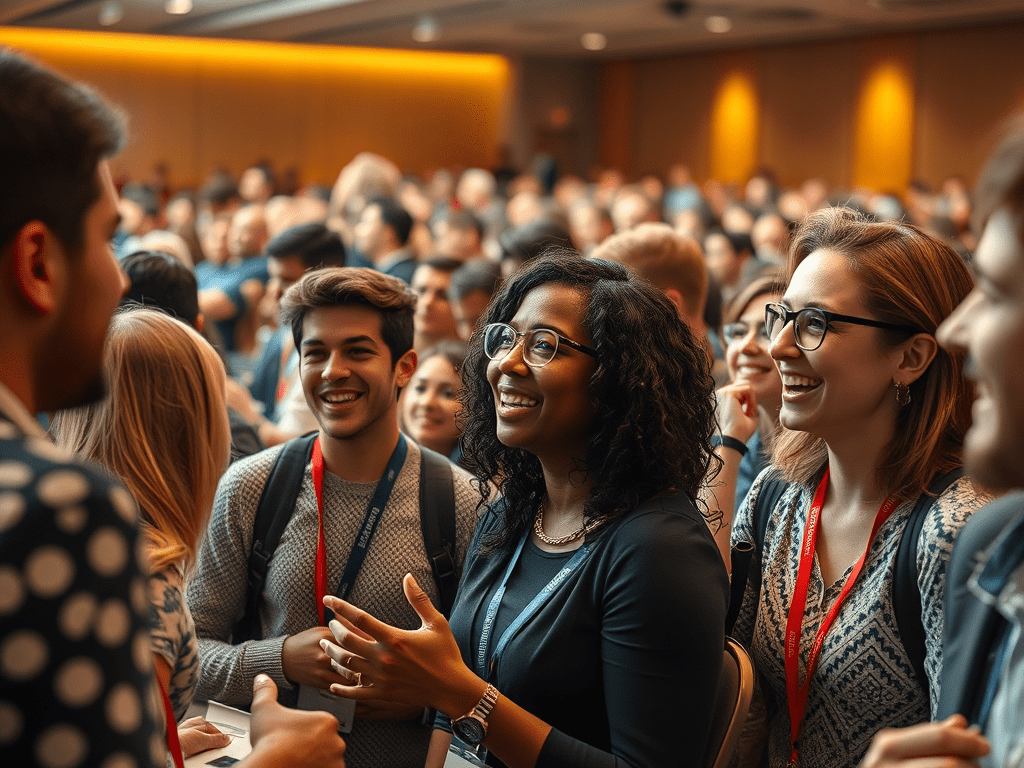
    After that, we headed to a networking mixer—an event I was especially excited about. It was basically a room full of professionals from all different areas of journalism and media, and we were given free time to speak with them, ask questions, and just learn.

    I didn’t waste a second.

    The first person I spoke to was someone who runs a news network—the person who decides what stories get covered, what leads the evening report, and what makes the cut. Talking to someone like that reminded me how much power goes into shaping public understanding. It made me think about all the people whose stories don’t make the cut and how much work we still have to do to widen the lens.

    The second person I talked to was an award-winning filmmaker who’s been featured at festivals all over the country. As someone who’s currently working on a documentary of my own, this conversation was everything. I told him about my goal of submitting my film to festivals—not just for recognition, but to raise money for food pantries and nonprofits I’ve partnered with. He shared advice and encouragement and even offered to review my work when it’s done.

    The third person I met works at National Geographic and has directed multiple documentaries and films. The kinds of projects I grew up watching in awe. Getting to speak with someone behind that level of work—and have a real, human conversation—was surreal. She was kind, honest, and deeply passionate about the stories she tells.

    And what shocked me most? They all listened to me. Like really, truly listened. They didn’t see me as “just a teenager”—they saw me as a storyteller in my own right. They were impressed by how much I’d already done, and for the first time, I really let myself be proud of it too.

    Today reminded me exactly why I do this work.

    Not because it’s easy. Not because it guarantees recognition. But because storytelling has the power to change lives. To open minds. To restore dignity.

    It was a day of challenging myself—of walking up to people who used to intimidate me and saying, Hi. This is who I am, and this is what I’m creating. And what I found was that those people? They weren’t intimidating at all. They were welcoming. They saw me. And some were even a little shocked by how much I’d already done.

    That meant everything.

    Today, I didn’t just listen to stories—I became more confident in my own. And that confidence will carry me through every documentary I make, every voice I amplify, and every moment I want to quit but choose to keep going.

    Day 3? Easily one of the most unforgettable, empowering days of my life.

  • Day 2 WJMC : Into the Deep End

    Day 2 WJMC : Into the Deep End

    If I had to sum up Day 2 in one phrase, it would be this: jumping in headfirst.

    I woke up nervous. Excited, but nervous. Today was supposed to be the busiest day of the whole week—and it was. But I had no idea that it would also be the most transformative one.

    We kicked things off with a First Amendment simulation, and to be honest, I wasn’t expecting it to hit me the way it did. I knew the First Amendment mattered—I mean, it’s the foundation of journalism, of speaking truth to power, of asking hard questions and refusing to be silenced. But this wasn’t just a textbook definition. This was real. Our scenario placed us in a school in Virginia where student journalists were censored by a principal who shut down their article. It was our job to argue whether or not their First Amendment rights were violated.

    My group decided I should be the one to represent our argument in front of the whole room. Me. The girl who’s never done a formal debate in her life. My hands were shaking. My heart was pounding. I kept thinking, What if I mess up? What if I forget what to say? But then something shifted. I remembered why I love journalism in the first place—not because it’s easy, but because it’s necessary. I remembered every story I’ve told, every person who trusted me to speak for them when they couldn’t. And I realized that if I couldn’t speak now—if I let fear win—then what was the point?

    So I did it. I stood up and spoke for the students. I argued that censorship in student journalism is a direct violation of our rights. That young voices matter. That truth shouldn’t be silenced just because it’s uncomfortable. And we won the debate.

    That feeling—of being heard, of standing up for something bigger than myself—was electric. It made me realize that the most powerful tool I’ll ever have is my voice.

    After the simulation, we attended a conference session that dove deep into the evolving landscape of media—especially the rise of AI and how social platforms like YouTube, TikTok, and Instagram are becoming the primary news sources for people my age. It was both fascinating and jarring.

    As someone who grew up creating digital content—building a platform from scratch, watching it grow beyond anything I could’ve imagined—this hit home. It reminded me of the power we hold. It’s no longer just legacy media—The New York Times, The Washington Post—deciding what gets published. It’s us. Regular people. Teenagers with cameras. Strangers with stories. Survivors with something to say. And that’s both beautiful and dangerous.

    Because yes, it means we finally have the chance to uplift voices that were once ignored. It means a girl in her bedroom with a phone can make just as big of an impact as a journalist in a newsroom. But it also means misinformation spreads faster than ever. That headlines can be crafted for clicks instead of truth. That stories can be manipulated, distorted, or completely made up—and still go viral.

    This session was a wake-up call. It reminded me that being a creator comes with responsibility. That passion isn’t enough—it has to be paired with integrity. If I’m going to be someone who shares stories, then I need to make sure those stories are rooted in truth. Not bias. Not popularity. Truth.

    And even more than that, it reminded me why I started this journey in the first place. Not for views. Not for attention. But to give people a voice. To use mine to lift others. Because no one’s story should be silenced—not because of money, or power, or politics.

    I walked away from Day 2 feeling fuller. Not just with knowledge, but with purpose. I realized that journalism isn’t just a career path for me—it’s a calling. It’s where all the pieces of who I am come together: the listener, the question-asker, the storyteller, the advocate.

    And yeah, I was nervous going into today. But I’m learning that growth lives on the other side of fear. That if you want to be someone who makes change, you have to be willing to stand up—especially when your voice is shaking.

    Today reminded me that this journey I’m on isn’t supposed to be easy. It’s supposed to stretch me. Challenge me. Push me to ask better questions and tell better stories. It taught me that stepping into the unknown—into the deep end—isn’t something to be afraid of. It’s something to embrace.

    Because that’s where the real learning begins.

    And I never want to stop learning.

  • Day 1 WJMC

    Day 1 WJMC

    I remember walking into the conference hall on Day 1 of WJMC feeling like my brain had to catch up with my heartbeat. Everything felt electric—there was this humming energy in the air, like the sound of so many voices waiting to be heard. Maybe it was nerves. Maybe it was excitement. Maybe it was both, tangled up together. But one thing was clear from the start: I wasn’t alone in the way I felt about journalism.

    That was revolutionary for me.

    I’m so used to being the person in the room who talks about media, storytelling, or digital content creation with wide eyes and a hundred unfinished sentences. But this time? I was surrounded by hundreds of people who lit up in the same way. From students who flew in from big cities like New York, to those from the quiet corners of Kansas—everyone had a story, a reason, a fire inside them for this field. And for once, I didn’t have to explain why I cared so much. Everyone just… got it.

    So, I made myself a promise that day: Listen more. Speak up anyway. Be curious. Be uncomfortable. I decided to challenge myself—not just to hear the keynote speakers, but to really listen to the people around me. The ones sitting next to me. The ones walking beside me to dinner. The ones whose names I didn’t know yet. I wanted to understand what brought them here. What they hoped to learn. What they dreamed of doing. And let me tell you: these were not surface-level conversations. These were real, raw, beautiful exchanges of passion.

    One girl told me she started a podcast about identity and growing up first-gen. Another guy shared how he shoots short films with his cousins in his backyard because his school doesn’t offer a film class. I heard voices crack with vulnerability, and I saw eyes light up with inspiration. We were strangers at breakfast, but storytellers by dinner.

    That night, we had our first speaker—Savannah Behrmann, the Senate Correspondent at National Journal. I didn’t know what to expect, but her words hit like a gut punch in the best way. She didn’t just talk about politics or headlines. She talked about people. About the stories that don’t make it into breaking news alerts or front pages. The ones that are often whispered or buried because they’re inconvenient, emotional, or overlooked.

    She said, “The most important stories are the ones that are hardest to hear.”

    That line hasn’t left me since.

    She reminded us that statistics don’t cry. Charts don’t bury their children. Graphs don’t grow up in food deserts or get deported or work two jobs to afford textbooks. People do. And if you’re a journalist who forgets that, you’ve missed the story entirely.

    Her message echoed everything I already believed in my gut: that the stories that aren’t told are often the ones that matter most. That sometimes, it’s not the headline that needs to change—it’s who we give the mic to.

    After she spoke, the moderator opened the floor for questions. There were 400 of us in that room. I could feel the weight of that number in my chest. The mic stood in the aisle like a spotlight no one wanted to step into. And honestly? I didn’t have a perfect question. I wasn’t even sure I had a question. But I stood up anyway.

    I walked to the mic with shaky hands and a racing heart, telling myself the same thing I always do when I’m scared: Just start. You’ll figure it out on the way.

    And I did. I spoke. My voice cracked a little, but it was mine. I asked a question—maybe not the most polished one—but it came from a place of genuine curiosity. And that was enough. People clapped. Savannah smiled. I walked back to my seat feeling like I had just jumped off a cliff and landed on solid ground.

    That moment mattered. Not because I asked a perfect question. But because I didn’t let fear keep me silent. I let the discomfort be proof that I was doing something bold.

    Day 1 at WJMC wasn’t just about journalism. It was about courage. The kind that whispers, Go. Ask. Speak. Be seen. Even when it’s terrifying. Especially then.

    And if I learned anything that day, it’s this:

    Stories don’t start when we feel ready. They start when we decide to speak—whether we’re in front of 400 strangers or just sittin6g quietly next to someone with a story to tell. The truth waits for no one. So why should we?

    Let this be the beginning—not just of a conference, but of a thousand brave questions.

  • Lights, Camera, Leadership – Building a Team After the Chaos

    Lights, Camera, Leadership – Building a Team After the Chaos

    That was the turning point for me. Instead of brushing it off, I wanted to make sure something like that never happened again. I started taking on more responsibility behind the scenes, organizing pre-show meetings, dividing the team into roles, and creating a clear routine so that everyone knew what to do when something went wrong.

    We made a checklist for every show: camera tests, lighting checks, backup mics, script reviews, and a final run-through before we went live. But it wasn’t just about organization; it was about teamwork.

    Broadcasting taught me that leadership isn’t about being the loudest voice in the room; it’s about being the calmest. When things fall apart, people don’t need someone to panic with them; they need someone to help them find their rhythm again. I learned to listen, delegate, and trust my team’s strengths.

    Over time, something amazing happened. We stopped being a group of nervous students running a show; we became a family running a production. The same people who once froze under pressure were now laughing through technical hiccups and helping each other problem-solve. Every Friday morning broadcast felt smoother, sharper, and more unified.

    Eventually, I realized that what we were doing was bigger than just a morning show, we were building a community. Broadcasting wasn’t just about reading announcements; it was about connection. We were sharing student stories, celebrating achievements, and giving people a platform to feel seen. And that all started with a team that learned how to work together after one unforgettable morning of complete and utter chaos.

    Looking back, I wouldn’t trade that disastrous first show for anything. It taught me patience, resilience, and the real meaning of leadership. Because in broadcasting, and in life, things will go wrong. What matters most isn’t the blackout itself, but how you bring the lights back on together.

  • More Than a Meal – The Dinner Table as Cultural Storyteller

    More Than a Meal – The Dinner Table as Cultural Storyteller

    Anthropologists talk about “cultural transmission,” the way beliefs, language, and customs are shared from one generation to the next, and in so many families, it happens right at the dinner table.

    When I think back to those family meals, I realize that’s where I learned some of my biggest lessons. It’s where I picked up the rhythm of my parents’ stories about growing up, where I learned my grandparents’ recipes, and where I started understanding what respect, patience, and gratitude really looked like. In between bites of food, culture was being passed along through stories, jokes, and even the occasional argument about who was doing the dishes.

    In many cultures, the dinner table is sacred. In Chinese culture, for example, meals are moments of unity, where food is served family-style to remind everyone that life is meant to be shared. In Mediterranean households, dinners can last for hours, filled with conversation and connection. Even in American life, where everything moves fast, the idea of “family dinner” has become a symbol of stability in a world that rarely slows down.

    As I got older, I started to realize that losing those dinners wasn’t just about missing time together; it was about losing the daily space where we communicated who we were. I missed the small things: the way my dad told stories about his childhood, the way my mom always asked the right questions, and the way my brother cracked jokes that made everyone laugh mid-bite.

    That’s why the dinner table matters so much. It’s not about being perfect or having long conversations every night; it’s about showing up. It’s about pausing the noise of the world long enough to listen, to talk, and to share a meal that’s more than just food.

    Because when families eat together, they remember who they are. And even as life gets busier and tables get emptier, we still carry those moments with us, the taste of home, the sound of laughter, and the feeling of belonging that only a dinner table can bring.

  • The Broadcast That Fell Apart – And What It Taught Me About Communication

    The Broadcast That Fell Apart – And What It Taught Me About Communication

    I still remember my first live morning show with the Broadcast Club like it happened yesterday. The bright studio lights were shining on us, the cameras were set, the script was ready, and the whole school was tuned in, waiting to watch. The air was thick with a mix of nerves and excitement, everyone whispering final cues, tapping their notes, checking their mics. It was supposed to be our big debut, the one we had spent all week rehearsing for.

    And then… everything went wrong.

    The second we went live, the teleprompter froze. The audio feed dropped. Someone bumped the main power cord, and suddenly half the equipment went dark. For a few seconds, it was complete chaos. People were running around the control room, shouting over each other, trying to fix things on the fly. One person was frantically plugging cables back in, another was flipping random switches hoping something, anything, would work.

    From the outside, it probably looked like a comedy skit, but in that moment, it felt like the longest, most stressful broadcast of my life.

    When the show finally ended, nobody said a word. The silence that followed was deafening. I remember just sitting there, headset still on, staring at the blank monitors. That morning taught me something I didn’t expect to learn from a live broadcast: technology might drive the show, but people make it happen. And when communication breaks down, even the best tech can’t save you.

  • Finding the Story Next Door – How I Discovered the Power of Local News

    Finding the Story Next Door – How I Discovered the Power of Local News

    When I was a kid, the news in my house usually meant big networks: CNBC, CNN, FOX, covering national headlines and world events. I thought that was what journalism was: political debates, global issues, and breaking stories that affected millions.

    But as I got older and began exploring broadcasting myself, my understanding of journalism started to shift. It wasn’t until I began volunteering at my local community food pantry that I truly saw the power and necessity of local news.

    At first, I didn’t think much of it. But while filming and reporting on local stories, I noticed something that national networks often miss: connection. Because I was part of the same community I was covering, people trusted me. They opened up about their experiences, the rising cost of groceries, the lack of public transportation, the challenges of balancing work and family.

    These weren’t “headline stories” in the traditional sense, but they were the heartbeat of our town. And without local journalism, many of these stories would never be told.