Category: Anthropology

  • Popo’s Kitchen – Where Stories Were Served with Every Meal

    Popo’s Kitchen – Where Stories Were Served with Every Meal

    Every time I visited my grandmother, my Popo, her kitchen felt like stepping into another world. The air was always warm, thick with the smell of garlic and soy sauce, and filled with stories. Popo had a story for every dish she made, and as a kid, I never thought much of it. I just thought she liked talking while she cooked.

    One of my favorite dishes was this simple steamed egg she’d make by whisking leftover egg whites with water. It looked humble, but it was unbelievably comforting, soft, savory, and warm. I once asked her where she learned to make it, and she told me that her own mother created it during a time when their family didn’t have much. Food was scarce, so they learned to stretch every ingredient to feed everyone. It wasn’t just a recipe; it was survival turned into tradition.

    That moment stayed with me. I realized that what we eat tells a story about who we are, where we come from, and what our families have endured. Every meal is a piece of history, an edible memory.

    And when I started paying attention, I realized this truth isn’t unique to my family. It’s everywhere. Around the world, food carries identity, culture, and emotion.

  • The Edible Archive – How Sushi, Tacos, and Pasta Tell the Past

    The Edible Archive – How Sushi, Tacos, and Pasta Tell the Past

    The more I learned about different cuisines, the more I saw how each one holds the same thread of memory, resourcefulness, and pride.

    Take sushi, for example. Today, it’s a global phenomenon, a symbol of Japanese precision and artistry, but its roots stretch far beyond Tokyo’s high-end sushi bars. I remember learning in AP World that the earliest version of sushi actually began in Southeast Asia, where people preserved fish in fermented rice to keep it fresh longer. When the method reached Japan centuries ago, it evolved into narezushi, and eventually into nigiri, the fast, fresh version we know today. What started as a method of survival turned into an art form, reflecting Japan’s deep respect for simplicity and balance.

    Or think about tacos. Long before they became the handheld comfort food loved around the world, they were a daily staple for Indigenous peoples in Mesoamerica. The word “taco” likely comes from the Nahuatl word tlahco, meaning “in the middle,” referring to how fillings were placed inside tortillas. Later, miners in 18th-century Mexico wrapped explosives in paper “tacos” to break apart rock, eventually lending their nickname to the food. Tacos tell a story of adaptation, blending Indigenous, colonial, and working-class roots into something proudly Mexican.

    Then there’s pasta, a dish that feels distinctly Italian, but its story stretches across continents. While many people credit Marco Polo with bringing pasta from China, the truth is more complicated. Ancient Etruscans in Italy were already making pasta-like foods thousands of years ago, and Arab traders later brought dried noodles to Sicily. Over time, pasta became Italy’s great equalizer, affordable, adaptable, and endlessly creative. Every region gave it a different shape and sauce, and together those variations became the language of Italian identity.

    Behind every beloved dish is the same story told in different ways: resourcefulness, migration, and connection.

  • Between Faith and Fact-Checking – How Generations Learn to Trust Media

    Between Faith and Fact-Checking – How Generations Learn to Trust Media

    Studies have shown that younger generations tend to be more skeptical of media than older ones. I remember at a journalism and media conference I attended, I learned that Gen Z and Millennials are far more likely to fact-check or cross-reference something they see on social media.

    It’s not that we don’t trust information; it’s that we trust patterns of credibility. A blue checkmark, multiple sources, or an official link mean more to us than a single video or headline.

    At the same time, this constant skepticism can be exhausting. With AI-generated videos and hyper-realistic images circulating daily, we’re living in a time where seeing is no longer believing. Technology has made it easier than ever to manipulate reality and harder than ever to agree on what’s real.

    But maybe that’s what defines the generational difference: adaptability. Older generations learned to trust the systems that informed them, while younger generations are learning to question the systems that shape them. Both perspectives have value. One teaches faith in structure; the other teaches caution in chaos.

    That night with my parents ended with all of us laughing, rewatching the hoverboard video while debating whether AI will ever stop surprising us. But deep down, I knew what made that moment special; it wasn’t about the video at all. It was about how every generation sees the world through a different lens, shaped by the media that raised them.

    And in today’s digital age, those lenses are changing faster than ever.

  • The Day Everything Stopped – How COVID Changed the Way We Celebrate

    The Day Everything Stopped – How COVID Changed the Way We Celebrate

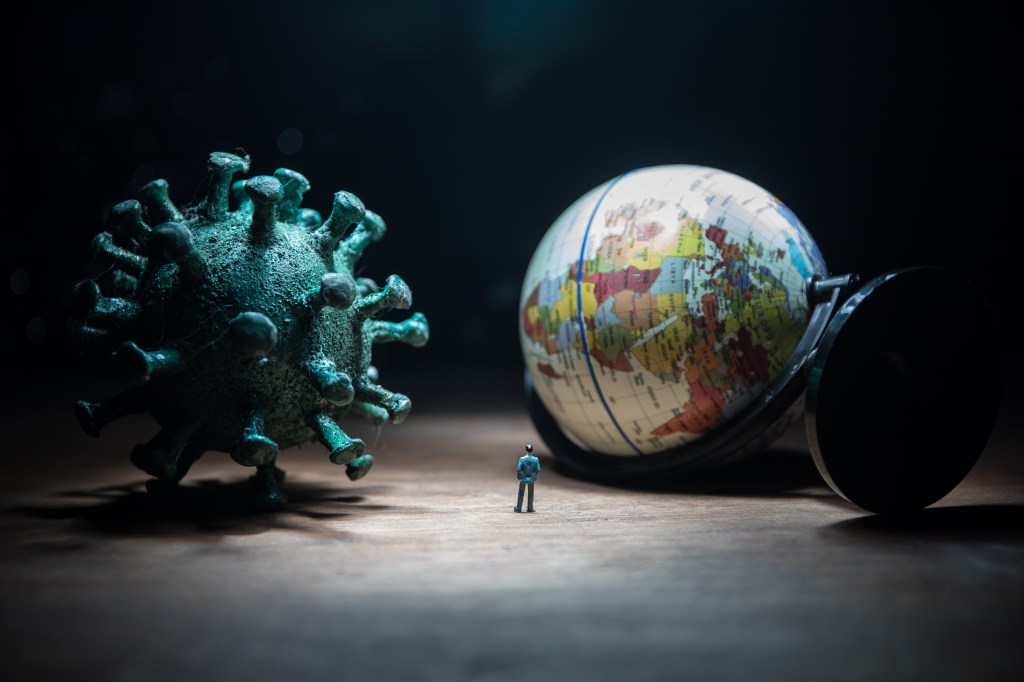
    I still remember the exact day everything changed. It was a Friday afternoon, and my mom got a phone call from the school. She hung up, turned to me, and said, “You’re not going to school for the next two weeks.”

    At the time, I didn’t think much of it. I had heard about this virus that was spreading in other countries, but I assumed it was something small, something that would blow over quickly. Two weeks off school sounded like a vacation. I imagined sleeping in, watching movies, and catching up on homework that I probably wouldn’t actually do.

    But then two weeks turned into a month, and that month stretched into two years.

    Suddenly, life as we knew it came to a halt. And with that, so did many of the cultural traditions we took for granted.

    Looking back, it’s incredible how much the pandemic reshaped how we connect and celebrate. Holidays like Thanksgiving and Christmas moved from crowded dining rooms to glitchy Zoom calls. Birthdays were celebrated through car parades, with friends honking from their driveways. Even graduations turned into virtual ceremonies, where instead of walking across a stage, students waved to webcams in their living rooms.

    But it wasn’t just the big events that changed; it was the small rituals too. Family dinners became sacred again. People started baking bread, cooking traditional recipes, and gardening as ways to feel grounded. Communities found creative ways to stay connected, from drive-in movie nights to socially distanced outdoor gatherings. Somehow, even in isolation, we found ways to hold onto what made us human.

  • When Rituals Evolve – What Pandemics Teach Us About Culture

    When Rituals Evolve – What Pandemics Teach Us About Culture

    Anthropologists often talk about how pandemics throughout history reshape culture. During the Black Plague in the 14th century, for example, people reexamined faith and mortality, leading to shifts in art, religion, and medicine. During the 1918 flu pandemic, traditions like handshakes disappeared for years, and public health became a collective value.

    COVID-19 will be remembered the same way, not just for the science behind it, but for how it transformed everyday life.

    What fascinates me is how quickly new traditions replaced old ones. We learned to celebrate virtually, to express affection through screens, and to mourn without being physically present. And even though it was hard, it showed how adaptable people are. Our rituals didn’t disappear; they evolved.

    When I finally returned to school two years later, everything felt different. People had changed, but so had the way we valued community. Simple things, like sitting with friends at lunch or seeing someone’s full smile without a mask, felt meaningful again.

    Pandemics have a strange way of reminding us what matters. They strip away the excess and force us to rebuild our traditions around connection, empathy, and resilience.

    So while that phone call from my mom marked the beginning of something scary and uncertain, it also marked the start of a new kind of cultural awakening, one that taught us how to hold on to each other, even when we had to stay apart.

  • Beyond the Dance – TikTok, Credit, and Cultural Connection

    Beyond the Dance – TikTok, Credit, and Cultural Connection

    Of course, this kind of digital sharing comes with both positives and challenges. On one hand, it’s amazing how accessible creativity has become; people from different backgrounds can collaborate, remix, and reinterpret ideas freely. It creates unity and shared experience, especially during moments like the pandemic when physical connection wasn’t possible.

    But on the other hand, there’s a fine line between cultural appreciation and cultural appropriation. I remember reading an article in my AP Seminar class last year about how some TikTok trends, especially dance ones, have been criticized for not giving credit to their original creators, many of whom come from marginalized communities.

    When culture spreads this fast, ownership and context can easily get lost along the way.

    Still, the rise of TikTok dances showed something powerful: we’re living in a time where young people are shaping global culture from their bedrooms. Movements, quite literally, move the world.

    Looking back at that seventh-grade memory, I realize it wasn’t just a moment of internet fame; it was a glimpse of how culture evolves in real time. Whether through dance, music, or memes, TikTok has become the Silk Road of the digital age, a place where ideas travel, transform, and remind us how connected we really are.

  • Seeing Isn’t Believing – A Family Moment That Revealed the Generational Media Gap

    Seeing Isn’t Believing – A Family Moment That Revealed the Generational Media Gap

    A few months ago, I was sitting in the living room with my parents when I showed them a video I’d found online. It was of a woman flying through the air on what looked like a real hoverboard. She zoomed over the water, flipped midair, and landed gracefully like something straight out of a sci-fi movie. My parents were absolutely amazed.

    “Wow! How is that possible?” my mom said.
    “That looks dangerous,” my dad added. “I didn’t even know physics allowed for that!”

    I couldn’t help but laugh. “Mommy, Baba,” I said, “this video was made by AI.”

    For a second, they looked at me in disbelief, then in realization. It was one of those moments where I could literally see the generational gap in how we interpret media. To them, the video was magic. To me, it was just another example of how convincing digital content has become.

    That moment stuck with me because it perfectly captured how differently generations approach media trust. My parents’ generation grew up in a world where most information came from established institutions, newspapers, television, and radio. If something was broadcast or printed, it was probably true.

    But my generation? We’ve grown up surrounded by Photoshop, filters, deepfakes, and misinformation. We’ve seen enough viral hoaxes and “too-good-to-be-true” stories to question almost everything we see online.

  • One Table, Many Stories – A Multicultural Thanksgiving

    One Table, Many Stories – A Multicultural Thanksgiving

    One of my earliest Thanksgiving memories isn’t just about turkey or pumpkin pie, it’s about translation through food. I grew up in a mixed family: some of my cousins came from European roots, others from Chinese heritage, and all of us were born in America. Every Thanksgiving dinner felt like a delicious cultural exchange.

    One side of the family brought the traditional American turkey with mashed potatoes and gravy, another brought delicate French-style crepes filled with Nutella and fruit, and my Chinese cousins brought mapo tofu, a spicy Sichuan dish that filled the room with warmth (and a little bit of chili-induced coughing).

    At first, it didn’t seem unusual to me. It was just “Thanksgiving.” But looking back, I realize how special it was that one table could hold so many stories, traditions, and histories. It wasn’t just a meal, it was a ritual of sharing.

  • Cross-Cultural Misunderstandings in Communication

    Cross-Cultural Misunderstandings in Communication

    I still remember my first real Chinese New Year family reunion. It was one of those moments that felt straight out of a movie, red decorations hanging from the ceiling, the smell of dumplings and soy sauce filling the air, and the sound of laughter echoing from every corner of the house. Twenty people, maybe more, sat around one big circular table that was covered with steaming dishes of fish, noodles, and vegetables.

    Everyone was speaking Chinese, fast.

    I sat there, chopsticks in hand, smiling and nodding along even though I had absolutely no idea what anyone was saying. The conversation moved so quickly that it felt like music I couldn’t quite follow, rhythmic, familiar, but just out of reach. I tried to catch a few words I’d heard before, but they slipped away before I could make sense of them. I felt out of place, like I was at the center of my own family but still somehow on the outside looking in.

    That’s when my popo, my grandmother, looked over at me. She must have noticed my confused expression because she smiled and, in her gentle voice, asked in English, “Are you hungry?”

    It was such a small thing, but in that moment, it meant everything. It reminded me that even when words don’t connect, love still does. Popo didn’t need to explain every joke or conversation, I could feel the warmth through her question, through the way she piled food onto my plate without asking, and through the laughter that surrounded the table.

    That dinner taught me something important about cross-cultural communication: sometimes misunderstanding isn’t failure—it’s part of being human. Different languages, customs, and traditions can create barriers, but they also create bridges. When we slow down and pay attention, we realize that connection doesn’t always come from perfect translation, it comes from care, patience, and effort.

    Cross-cultural misunderstandings happen everywhere. Maybe it’s using the wrong greeting, misinterpreting a gesture, or struggling to express something that doesn’t quite fit in another language. But those moments are also opportunities to learn and grow. They remind us that communication isn’t just about what we say, it’s about what we mean, and how we make others feel.

    That Chinese New Year, I didn’t understand most of the words spoken around the table, but I understood what mattered. The laughter, the food, the generosity, it all spoke louder than language ever could.

    Because sometimes, the most meaningful conversations don’t need words at all.
  • When Words Fall Short – What Cross-Cultural Misunderstandings Teach Us

    When Words Fall Short – What Cross-Cultural Misunderstandings Teach Us

    That night stayed with me because it taught me something important about cross-cultural communication: misunderstanding isn’t failure; it’s part of being human. Different languages, customs, and traditions can create barriers, but they also create bridges.

    When we slow down and pay attention, we realize that connection doesn’t always come from perfect translation; it comes from care, patience, and effort.

    Cross-cultural misunderstandings happen everywhere. Maybe it’s using the wrong greeting, misinterpreting a gesture, or struggling to express something that doesn’t quite fit in another language. But those moments are also opportunities to learn and grow. They remind us that communication isn’t just about what we say; it’s about what we mean and how we make others feel.

    That Chinese New Year, I didn’t understand most of the words spoken around the table, but I understood what mattered. The laughter, the food, the generosity, it all spoke louder than language ever could.

    Because sometimes, the most powerful conversations don’t need words at all.