Author: Mia Jean

  • The Shift in Power – How Social Media Rewrote the News

    The Shift in Power – How Social Media Rewrote the News

    It’s crazy to think about how much the way we get our news has changed in such a short time. Just twenty years ago, the headlines that shaped public opinion came from big names: The New York Times, CNN, The Washington Post. News anchors had the final word, and if a story wasn’t covered by a legacy network, it might as well not have existed. But now, it feels like that power has shifted to the palm of our hands—literally.

    At a news conference I attended last summer, the moderator asked a simple question: “Where do you get your news from?” Almost every teenager in the room raised their hand for TikTok, Reddit, or YouTube. Around 80 percent, easily. Only a handful mentioned newspapers or TV. It was shocking at first, but also kind of eye-opening. The world of news has changed, and it’s changing faster than anyone expected.

    There are a few reasons for this shift. For one, social media gives anyone a voice. You don’t need a press badge or a million-dollar newsroom to share what’s happening around you, you just need a phone and a story. Platforms like TikTok have made it possible for everyday people to become witnesses, reporters, and storytellers.

    As someone who built my own platform on YouTube, I’ve seen the upside of that firsthand. I’ve been able to share stories that probably wouldn’t have made it past traditional media filters and connect with audiences who might have never found them otherwise.

    The result? A more democratic, but also more chaotic, information world. The gatekeepers are gone, and in their place stand creators, algorithms, and audiences trying to figure out what’s real.


  • The Psychology of Viral Videos: Why Do Videos go Viral?

    The Psychology of Viral Videos: Why Do Videos go Viral?

    I still remember the exact moment it happened.
    It was the Fourth of July, and my family and I were driving to see fireworks when my phone suddenly exploded with notifications. Thousands of them. For a second, I thought something was wrong, then I realized what had happened: my most recent YouTube video had gone viral.

    It was the moment I had dreamed about for an entire year. I had poured hours into editing, scripting, and fine-tuning my videos, hoping one of them would finally break through. And that night, it did. But after the excitement settled, a question started to form in my head: why that video?

    Why do some videos go viral while others—sometimes even better ones—barely get noticed? I knew it couldn’t just be about effort. There are thousands of small creators who spend hours perfecting their videos that never get traction, while some random five-second clip takes off overnight. So, I started researching.

    What I found was that social media platforms operate like companies—their algorithms are designed to keep viewers on the platform for as long as possible. That means videos that are sticky, emotional, or easy to share are favored. It’s less about production quality and more about engagement potential. If your video makes people watch till the end—or better yet, makes them comment, like, or share, it tells the algorithm, “Hey, this keeps people hooked,” and the platform pushes it out to more users.

    But there’s also a psychological side to virality. Studies show that videos that trigger strong emotions, especially awe, laughter, or anger, tend to spread faster. Humans are wired to share emotional experiences. When something makes us feel deeply, we want others to feel it too. That’s why heartwarming rescue videos, shocking headlines, and funny clips blow up—they make us react instantly.

    Timing also plays a role. Posting when your audience is most active or when a topic is trending can make the difference between 100 views and 1,000,000. People want to feel part of the moment, and viral content feeds that sense of belonging.

    And then there’s the “relatability factor.” Viral videos often feel personal. They look raw, authentic, and unscripted, even when they’re not. Viewers see a bit of themselves in the creator or the situation, which builds trust and makes them hit “share.”

    So while I may not have cracked the full formula behind virality, I’ve learned this: going viral isn’t just about luck. It’s about understanding how people think, feel, and connect. Every share, every comment, every click, it’s all part of a bigger psychological pattern.

    That Fourth of July taught me more than what it feels like to go viral. It showed me how powerful storytelling can be, even in its simplest, shortest form. And ever since then, I’ve been chasing not just numbers, but the human reasons behind them.

  • When Words Fall Short – What Cross-Cultural Misunderstandings Teach Us

    When Words Fall Short – What Cross-Cultural Misunderstandings Teach Us

    That night stayed with me because it taught me something important about cross-cultural communication: misunderstanding isn’t failure; it’s part of being human. Different languages, customs, and traditions can create barriers, but they also create bridges.

    When we slow down and pay attention, we realize that connection doesn’t always come from perfect translation; it comes from care, patience, and effort.

    Cross-cultural misunderstandings happen everywhere. Maybe it’s using the wrong greeting, misinterpreting a gesture, or struggling to express something that doesn’t quite fit in another language. But those moments are also opportunities to learn and grow. They remind us that communication isn’t just about what we say; it’s about what we mean and how we make others feel.

    That Chinese New Year, I didn’t understand most of the words spoken around the table, but I understood what mattered. The laughter, the food, the generosity, it all spoke louder than language ever could.

    Because sometimes, the most powerful conversations don’t need words at all.

  • Visual Rhetoric: Why Certain Images Become Iconic

    Visual Rhetoric: Why Certain Images Become Iconic

    Have you ever noticed that there are some pictures everyone just seems to know? You don’t need a caption or context, one look, and you instantly recognize what it’s about. Think of the “Earthrise” photo from Apollo 8, the man standing in front of the tank at Tiananmen Square, or the image of firefighters raising the flag at Ground Zero. These aren’t just photographs—they’re pieces of collective memory. Everyone may not remember the exact date or location, but they remember the feeling.

    I think my fascination with this started back in history class. We were studying the Declaration of Independence and looking at early American documents, the kind that have lasted centuries, and I remember thinking, why do some visuals stick forever while others fade away? It hit me that certain documents, like certain images, have a kind of permanence to them. They don’t just record information, they capture emotion, power, and meaning in a way that survives across generations.

    As someone who’s always been interested in media, I kept wondering what made one image or symbol stand out while others disappeared. What gives a visual its staying power? I started noticing patterns: iconic images often appear during moments of deep emotion or change. They might represent unity, struggle, hope, or defiance, universal feelings that connect people no matter where they’re from.

    That’s the magic of visual rhetoric, it’s not just what we see, but what we understand and feel when we see it. A great image or document speaks to something beyond its time. It becomes a symbol that people return to again and again when they need to remember, reflect, or even heal.

    In a world where we scroll past hundreds of images a day, it’s easy to forget how powerful one picture can be. But the ones that last, the ones that define eras, remind us that sometimes, one frame can carry the weight of history itself.

  • The Gaps in the Feed – Why Some Stories Never Make the News

    The Gaps in the Feed – Why Some Stories Never Make the News

    When we think about the news, we often assume it gives us a full picture of what’s happening in the world. But the truth is, media coverage only scratches the surface. What we see, hear, and read every day is carefully filtered, sometimes by time constraints, sometimes by audience interest, and sometimes by economic or political factors that decide which stories make the cut. The result? Whole communities, issues, and experiences are left in the dark.

    Media silence doesn’t always mean intentional censorship; it can be the product of priorities. Big networks tend to focus on what will attract the largest audiences: major political events, celebrity scandals, or breaking crises. These stories draw clicks, ratings, and ad revenue. Meanwhile, local stories about poverty, language access, or environmental issues often get overlooked because they don’t seem “marketable.”

    It’s not that they aren’t important, it’s that they don’t fit the fast-paced rhythm of mainstream media. And when the pace of news becomes the standard for what’s worth covering, anything quiet or complex risks being ignored.

  • Clothing as Cultural Code: What We Wear Says About Us

    Clothing as Cultural Code: What We Wear Says About Us

    I still remember the first time I really thought about what clothes say. It was cultural heritage day at school, and everyone was encouraged to wear something that represented their background. I had no idea what to wear at first, jeans and a hoodie felt too plain, but dressing up in traditional clothing felt unfamiliar. Finally, my grandmother insisted I wear a silk jacket she had brought from China years ago. It was red with gold embroidery, slightly too big, and definitely stood out in the sea of T-shirts and sneakers.

    At first, I felt self-conscious walking down the hallway, but something changed during lunch. One of my friends asked me about the jacket, where it came from, what the designs meant, and suddenly I found myself telling stories about my family, my grandparents, and the meaning behind the patterns. That jacket became a conversation, a bridge between cultures, and a reminder that clothing isn’t just fabric, it’s communication.

    Around the world, what we wear has always been a form of language. Anthropologists often describe clothing as a cultural code, a system of symbols that tells others who we are, what we value, and where we belong. Think of the white robes of Middle Eastern deserts, designed for heat and modesty; the colorful saris of India, each hue carrying social or regional meaning; or the Scottish kilt, which once identified entire clans through patterns called tartans. Every piece of clothing holds history, geography, and identity woven into its threads.

    Even modern fashion reflects culture more than we realize. Streetwear, for example, started as a form of rebellion and self-expression in marginalized communities before becoming a global phenomenon. Business suits, once symbols of professionalism and Western success, are now reinterpreted across continents with new colors, fabrics, and cuts that reflect local style and individuality.

    Clothing also tells silent stories about belonging and exclusion. Uniforms unite people under a shared identity, students, athletes, doctors, while traditional garments preserve the roots of heritage and resistance. In many Indigenous communities, reviving cultural dress is an act of reclaiming history that colonization tried to erase.

    What’s fascinating is that clothing constantly evolves with society. Just as languages adapt to new times, so do our wardrobes. Trends rise and fall, but the idea remains the same: what we wear speaks before we do. It can express pride, status, rebellion, or memory, all without a single word.

    When I think back to that school day, I realize my red jacket was more than just clothing, it was a message. It said: This is where I come from, and this is who I am becoming. Whether we’re dressing for tradition, comfort, or creativity, every outfit we put on tells part of our story.

    So next time you get dressed, take a moment to think about what your clothes might be saying, because whether you mean to or not, you’re already speaking.

  • Between Neon and Noise – What Tokyo Taught Me About New York

    Between Neon and Noise – What Tokyo Taught Me About New York

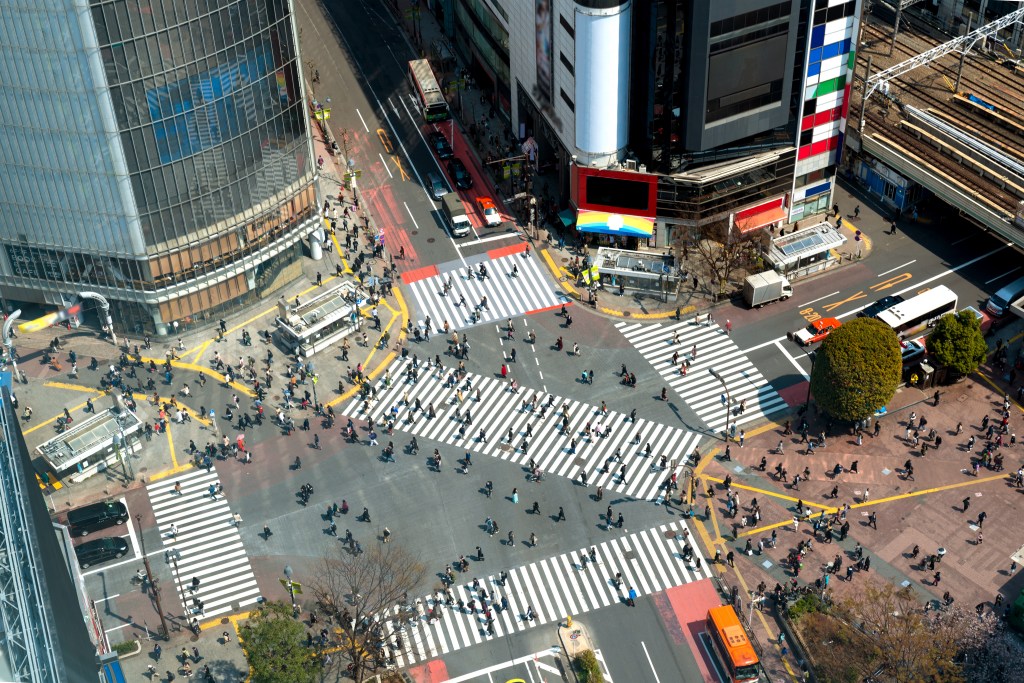
    I remember the first time I stepped foot into Tokyo. For my entire life, I’d lived in New York, a city that never really sleeps; it just changes rhythm. I had grown used to it all: the one-dollar pizza slices, the garbage piled along the curbs, the yelling in that unmistakable New York accent, the subway musicians, and the car horns that almost sound like background music to the city itself. It was chaos, but it was familiar chaos.

    Then, I landed in Tokyo. And everything I thought I knew about city life suddenly shifted.

    The first thing I noticed was the light. Tokyo didn’t just glow; it radiated. Even at midnight, the city felt alive, as if the sun had simply decided to move underground and power the neon signs instead. People moved through the streets with quiet efficiency. No one shouted. No one jaywalked. And what stunned me most was that there wasn’t a single piece of trash on the ground. Not even a piece of gum.

    I couldn’t stop comparing it to New York, but eventually, I realized something: both cities were telling stories; they just spoke different languages.

    That’s what drew me to think about cities not just as places, but as living stories, each one revealing who we are through how we move, build, and belong.

  • How Memes Have Become Political Weapons

    How Memes Have Become Political Weapons

    When I first started studying history, the “primary sources” we looked at were things like the Declaration of Independence, the Constitution, and famous speeches. But now, in my classes, we sometimes analyze political cartoons, and even memes. It sounds funny, but it actually says a lot about how communication has changed. What used to be written in long essays or formal documents is now being boiled down into a single image with bold text and a punchline.

    Memes aren’t just jokes anymore. They’ve become one of the fastest ways to spread political messages, especially to younger audiences who might not even realize they’re being influenced. A simple meme on Instagram or TikTok can turn into a viral opinion overnight. Kids as young as twelve are scrolling through their feeds and seeing political ideas disguised as humor or pop culture references. It’s subtle, but it’s powerful.

    The truth is, this isn’t entirely new. Politics have always found their way into entertainment. In my AP Gov Class, we learned about the significance of the Even The Wizard of Oz at the time of its release. As we all know, the Wizard of Oz is one of the most famous stories of all time, and is actually acts as a political allegory about economic struggles in the late 1800s, the Yellow Brick Road representing the gold standard, the Scarecrow symbolizing farmers, and the Tin Man representing industrial workers. People have always used stories to reflect political realities. The only difference now is that our stories are shorter, faster, and scrollable.

    What makes memes so effective is that they’re emotional. They can take a complicated issue, like taxes, elections, or foreign policy, and shrink it into something funny, shocking, or relatable. That emotional punch makes them stick. The downside, though, is that context often gets lost. When politics are reduced to memes, the facts can get twisted, and people start forming opinions based on half-truths or satire.

  • The Moment Between – Why Rites of Passage Matter

    The Moment Between – Why Rites of Passage Matter

    If you really think about it, life is a series of milestones that mark where we’ve been and where we’re headed next. Some are small, like getting your first driver’s license or your first job, and others feel monumental, like graduations or big celebrations.

    I still remember my middle school graduation. We all sat in rows of folding chairs, dressed a little too formally for a gymnasium that smelled faintly of basketballs and cleaning spray. When they called my name, I walked across the stage, shook hands with the principal, and smiled for a picture that I knew my mom would frame. It felt like the end of something and the beginning of something else.

    That’s the thing about rites of passage: they’re not just ceremonies. They’re stories we tell about growing up, moving forward, and becoming someone new.

    Anthropologists have studied these rituals for centuries, from tribal initiation ceremonies in Africa to bar mitzvahs in Jewish culture. Each one marks a symbolic transformation: child to adult, student to graduate, single to married.

    And though our settings have changed, from open fields to school gyms to virtual livestreams, the meaning remains the same. These moments help us understand that growth isn’t just a personal journey; it’s something shared.

  • The City as Storyteller – What Urban Anthropology Reveals About Culture

    The City as Storyteller – What Urban Anthropology Reveals About Culture

    That’s what urban anthropology is all about: the idea that cities aren’t just collections of buildings and streets but living, breathing reflections of the people who inhabit them. They tell us what a culture values, how it interacts, and what it dreams of becoming.

    In New York, the story is one of movement and noise. It’s a city built on ambition and diversity, where cultures collide and somehow coexist. Street art, food trucks, subways, and skyscrapers all tell a story of people constantly striving, hustling, and reinventing themselves. The messiness is the message; it reflects freedom, individuality, and the idea that anyone can belong.

    Tokyo, on the other hand, tells a story of respect, precision, and harmony. Its order and cleanliness aren’t just rules; they’re reflections of collective care. The bright signs and endless vending machines reveal a culture that blends tradition with technology and ancient values with futuristic dreams.

    When you look closely, every city becomes a mirror. Paris whispers of romance and history. Cairo hums with the rhythm of ancient civilizations. Seoul pulses with innovation and youth culture. Each one has its own emotional signature, a rhythm that shapes how people think, behave, and connect.

    Cities are more than geography; they’re anthropology in motion. The way people move through them, the spaces they create, and even the silences between sounds reveal who they are. A city is, in many ways, the autobiography of its citizens.

    So when I think back to that first night in Tokyo, standing under neon lights that shimmered across rain-soaked streets, I realize that both New York and Tokyo told me something profound: every city is a storyteller.