Author: Mia Jean

  • Inside the Algorithm – The Psychology of Viral Videos

    Inside the Algorithm – The Psychology of Viral Videos

    What I found was that social media platforms operate like companies, their algorithms are designed to keep viewers on the platform for as long as possible. That means videos that are sticky, emotional, or easy to share are favored. It’s less about production quality and more about engagement potential. If your video makes people watch till the end, or better yet, makes them comment, like, or share, it tells the algorithm, “Hey, this keeps people hooked,” and the platform pushes it to more users.

    But there’s also a psychological side to virality. Studies show that videos that trigger strong emotions, especially awe, laughter, or anger, spread faster. Humans are wired to share emotional experiences. When something makes us feel deeply, we want others to feel it too. That’s why heartwarming rescues, shocking headlines, and funny clips blow up; they make us react instantly.

    Timing plays a role too. Posting when your audience is most active or when a topic is trending can mean the difference between 100 views and 1,000,000. People want to feel part of the moment, and viral content feeds that sense of belonging.

    And then there’s the relatability factor. Viral videos often feel personal. They look raw, authentic, and unscripted, even when they’re not. Viewers see a bit of themselves in the creator or the situation, which builds trust and makes them hit “share.”

    So while I may not have cracked the full formula behind virality, I’ve learned this: going viral isn’t just about luck. It’s about understanding how people think, feel, and connect. Every share, every comment, every click, it’s all part of a bigger psychological pattern.

    That Fourth of July taught me more than what it feels like to go viral. It showed me how powerful storytelling can be, even in its simplest, shortest form. And ever since then, I’ve been chasing not just numbers, but the human reasons behind them.

  • The Language of the Table – Why Sharing Food Means Belonging

    The Language of the Table – Why Sharing Food Means Belonging

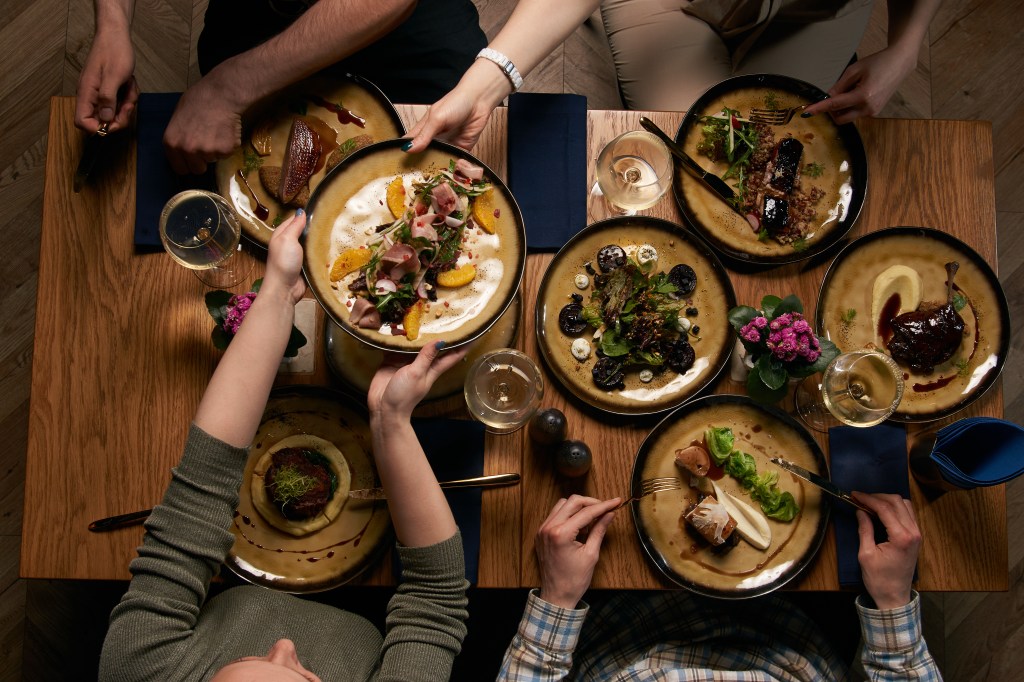
    Even in Western cultures, the idea of breaking bread together carries deep meaning. In ancient Greece, the symposium was both a feast and a forum, where people ate, debated philosophy, and built community through conversation. In many ways, our modern dinner tables still serve the same purpose.

    When I think back to my own Thanksgiving table, turkey beside mapo tofu, cranberry sauce next to crepes, I realize it wasn’t chaos. It was a connection. Each dish represented generations of migration, adaptation, and identity. Each one said, “We belong here, together.”

    Communal meals remind us that food is one of the few things that transcends language. You don’t need to speak the same tongue to share a dish. You just need to sit down, pass the plate, and listen to the stories that come with it.

    So whether it’s a traditional feast, a potluck, or even takeout shared among friends, these rituals of sharing keep us grounded. They remind us that every meal, no matter how small, is an act of belonging.

  • The Moment It Happened – My First Viral Video

    The Moment It Happened – My First Viral Video

    I still remember the exact moment it happened.
    It was the Fourth of July, and my family and I were driving to see fireworks when my phone suddenly exploded with notifications, thousands of them. For a second, I thought something was wrong. Then I realized what had happened: my most recent YouTube video had gone viral.

    It was the moment I had dreamed about for an entire year. I had poured hours into editing, scripting, and fine-tuning my videos, hoping one of them would finally break through. And that night, it did.

    But after the excitement settled, a question started to form in my head: why that video?

    Why do some videos go viral while others, sometimes even better ones, barely get noticed? It couldn’t just be about effort. There are thousands of small creators who spend hours perfecting their videos that never get traction, while some random five-second clip takes off overnight.

    That’s when I started digging deeper into how virality really works and what it says about us as viewers.

  • The Red Jacket – Finding My Story Through What I Wore

    The Red Jacket – Finding My Story Through What I Wore

    I still remember the first time I really thought about what clothes say. It was cultural heritage day at school, and everyone was encouraged to wear something that represented their background.

    I had no idea what to wear at first; jeans and a hoodie felt too plain, but dressing up in traditional clothing felt unfamiliar. Finally, my grandmother insisted I wear a silk jacket she had brought from China years ago. It was red with gold embroidery, slightly too big, and definitely stood out in the sea of T-shirts and sneakers.

    At first, I felt self-conscious walking down the hallway. But something changed during lunch. One of my friends asked me about the jacket, where it came from, and what the designs meant, and suddenly I found myself telling stories about my family, my grandparents, and the meaning behind the patterns.

    That jacket became a conversation, a bridge between cultures, and a reminder that clothing isn’t just fabric; it’s communication. It carries stories even when we don’t realize it.

  • The Ethics of AI Deepfakes in Political Campaigns

    The Ethics of AI Deepfakes in Political Campaigns

    I still remember scrolling one night and stumbling across a video of Donald Trump being shoved into a police car. The clip looked real, the shaky camera, the crowd shouting, even the police uniforms. My first thought was: Wait, when did this happen? It had millions of views across platforms, and everyone in the comments seemed to have an opinion.

    But after reading more closely, I realized something unsettling: the video was a deepfake. It never happened.

    That moment stuck with me, not because I believed it, but because of how many people did. Some comments treated it as breaking news. Others were outraged or celebrating. Either way, it shaped opinions before the truth even had a chance to catch up.

    AI-generated deepfakes have blurred the line between truth and fabrication, and in politics, that line matters more than ever. Campaigns thrive on trust, and misinformation can tip the scales of public perception in seconds. A convincing fake video can spread faster than any fact-check ever could, and unlike a simple rumor, it comes with “proof” that looks real.

    So where do we draw the line? Should AI tools be banned from campaign advertising altogether? Or is it up to platforms and us to recognize when something feels too cinematic to be true?

    What I learned from that night is simple but important: in a world where anyone can generate reality, skepticism isn’t cynicism; it’s responsibility.

  • From #SchoolTips to #Connection – How I Discovered the Power of Hashtags

    From #SchoolTips to #Connection – How I Discovered the Power of Hashtags

    I still remember the night I stayed up late researching something called SEO. At the time, I was trying to understand how to make my YouTube videos reach more people. The book I was reading about the YouTube algorithm mentioned something that caught my attention: hashtags.

    It said that accurate hashtags in the description were essential if I wanted my videos to be seen, shared, and maybe even go viral.

    So I experimented. I tried #Roblox, #HudsonJean, #Motivation, #SchoolTips, pretty much every tag I could think of that might connect to my content. Slowly, I started to see results. My videos began showing up on people’s recommended pages, and the views started climbing.

    It wasn’t magic; it was connection. Those tiny words after a # symbol were linking my work to a much larger conversation happening around the world.

    That’s when I realized hashtags aren’t just tools; they’re pathways.

  • The Night I Fell for a Deepfake – When Seeing Isn’t Believing

    The Night I Fell for a Deepfake – When Seeing Isn’t Believing

    I still remember scrolling one night and stumbling across a video of Donald Trump being shoved into a police car. It looked real, the flashing lights, the camera shaking, the crowd shouting his name. The video had millions of views, thousands of comments, and people arguing about what it meant.

    For a few seconds, I was genuinely confused. When did this happen? Why wasn’t it all over the news?

    Then I checked the comments more closely. Someone wrote, “Guys, this isn’t real, it’s a deepfake.” I paused the video, replayed it, and suddenly saw it, the odd blink, the strange mouth movement. The entire thing was AI-generated. None of it had ever happened.

    That moment stuck with me because it showed just how easy it is to mistake fiction for fact online. If I could believe it for even a moment, how many others shared it thinking it was real? How many formed opinions or arguments around something that never actually occurred?

    Deepfakes use artificial intelligence to create fake videos and audio that look and sound shockingly real. They’ve been used for entertainment and satire, but in politics, the consequences are far more serious.

  • Around the Fire – How My Grandmother Taught Me the Art of Listening

    Around the Fire – How My Grandmother Taught Me the Art of Listening

    I grew up listening to my grandmother’s stories, but what always amazed me wasn’t just what she told me; it was how she told it.

    She didn’t rush. She didn’t look down at a phone between sentences. She didn’t need a visual or a clickbait title to hold attention. She simply spoke.

    She told me about her childhood, growing up in a house with eight siblings. Every night, after a long day of chores, they would gather in the living room. There was no TV, no internet, just her mother’s voice. She said her mom had this way of weaving stories that felt almost magical. Some nights, the stories were about her grandparents’ journey from the old country. Other nights, they were about something funny that had happened in the village or a lesson about kindness, humility, or hard work.

    They would listen for hours.

    What stood out to me most was how much attention those moments required. Nobody interrupted. Nobody “checked out.” The only thing glowing in the room was the fire in the fireplace, not a screen.

    When my grandmother talked about those nights, she always smiled. “That was how we learned,” she said. “That was how we connected.”

    In a way, those storytelling sessions were their form of social media, long, slow, and deeply human. Everyone had time to speak. Everyone had time to listen. It wasn’t about speed or stimulation; it was about connection.

  • From Clicks to Causes – How Hashtags Unite the World

    From Clicks to Causes – How Hashtags Unite the World

    What started as a strategy for boosting my videos opened my eyes to how hashtags shape movements far beyond social media marketing.

    Think about #MeToo, #BlackLivesMatter, #FridaysForFuture, or even #StandWithUkraine. Each one began as a small phrase typed by someone hoping to spark attention and ended up uniting millions. Hashtags transform individual voices into collective action. They turn isolated stories into shared experiences.

    In a world overflowing with content, hashtags help people find community. They cut through noise, organize chaos, and give visibility to the unseen. They’ve redefined activism, allowing anyone with a phone and Wi-Fi to participate in global change.

    For me, it started with trying to get a few more clicks on a video. But what I learned is that hashtags aren’t just about algorithms; they’re about alignment. They connect people who might never meet in person but share the same hopes, frustrations, and goals.

    A single post might not change the world, but a hashtag can bring together the people who will.

  • Popo’s Kitchen – Where Stories Were Served with Every Meal

    Popo’s Kitchen – Where Stories Were Served with Every Meal

    Every time I visited my grandmother, my Popo, her kitchen felt like stepping into another world. The air was always warm, thick with the smell of garlic and soy sauce, and filled with stories. Popo had a story for every dish she made, and as a kid, I never thought much of it. I just thought she liked talking while she cooked.

    One of my favorite dishes was this simple steamed egg she’d make by whisking leftover egg whites with water. It looked humble, but it was unbelievably comforting, soft, savory, and warm. I once asked her where she learned to make it, and she told me that her own mother created it during a time when their family didn’t have much. Food was scarce, so they learned to stretch every ingredient to feed everyone. It wasn’t just a recipe; it was survival turned into tradition.

    That moment stayed with me. I realized that what we eat tells a story about who we are, where we come from, and what our families have endured. Every meal is a piece of history, an edible memory.

    And when I started paying attention, I realized this truth isn’t unique to my family. It’s everywhere. Around the world, food carries identity, culture, and emotion.