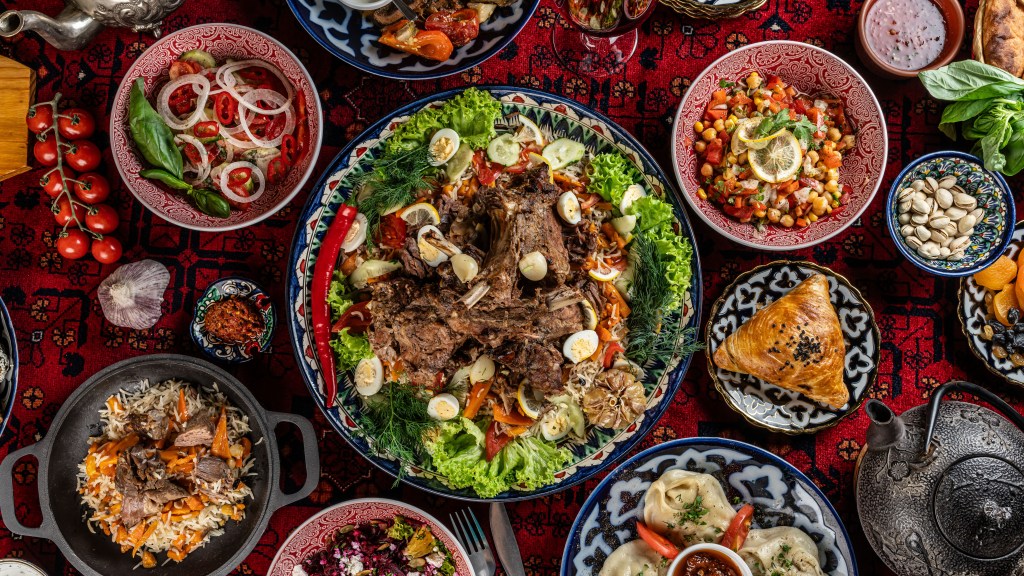
Across the world, communal eating is one of humanity’s oldest and most universal traditions. From ancient harvest festivals to modern dinner parties, food has always been more than sustenance; it’s a way to connect, celebrate, and communicate. Anthropologists often describe shared meals as “social glue,”a way to build trust, form identity, and strengthen community bonds.
In Japan, for example, the tea ceremony (chanoyu) is not simply about drinking tea; it’s about mindfulness, respect, and presence. The ritual emphasizes harmony between host and guest, where every movement, every sip, is deliberate and meaningful. It’s a shared pause in a busy world.
In Ethiopia, meals are communal by design. Families and friends gather around a large platter of injera, a spongy flatbread, and eat with their hands. There are no personal plates; everyone dips into the same dish. One beautiful tradition is gursha, where one person feeds another a bite of food as a gesture of love and trust.
In India, festivals like Diwali or Eid feature massive spreads of shared dishes, where food becomes an offering of generosity and faith. Even street food culture there, like chaat stalls and dosa stands, shows how communal eating breaks social barriers. Food brings together people of different classes, backgrounds, and beliefs.
And in the Middle East, sharing food is an act of hospitality rooted in centuries of tradition. Bedouin culture, for instance, values feeding guests before even asking their names. A shared plate of rice and lamb isn’t just a meal; it’s a statement of welcome and honor.
 Starting Narratives
Leave a comment